All-time Most Popular Posts

This Week's Most Popular Posts

Wednesday, February 23, 2011

My First Homemade Bread


So I told you that I finally got over my fears and picked up some yeast at the grocery store.  Well, I made hodduk (Korean sweet filled pancake) so many times that I decided it no longer made sense to buy the yeast in the packet.  I went ahead and got a whole jar of yeast.  Whew!  Talk about moving fast!  I opted for the RapidRise bread machine yeast by Fleischman's because, well, it's fast, and it says it's perfect for regular oven use, too.  Thus far, it has worked like a charm.  A full doubling of the dough usually takes 20-30 minutes, when covered in plastic and placed in a warm oven as mentioned in my "Conquering Kitchen Fears" post.

Well, having bought all that yeast, I convinced myself that I would have to play with it every weekend.  My first venture was a basic poppy seed loaf bread.  It is a spin on your basic sandwich loaf.  It has a touch of sweetness, a nice crunch and slight nuttiness from the poppy seeds, and a really nice, delicate background flavor of almond and vanilla.  I know you are thinking what I was, but, no, this is not a dessert bread.  It is still perfect for any sandwich and it tastes nothing like cake or cookies; it's just a more flavorful loaf that what you find in stores.

In terms of process, I am telling you this is beyond easy!  You will be so shocked that you've never done it before because it's so easy.  Baking this bread from start to finish is much easier than baking a cake.  I know, I know, it takes time to let it rise and blah blah blah.  Well guess what, when it's rising, you can get on with your life--exercise, go pick up groceries, do your homework, wash clothes, clean the house.  The point is, life need not stop because your bread is rising.  This bread required two risings and, as mentioned above, generally 30 minutes was sufficient for me, but bear in mind that I live in a hot and humid climate, so rather than going by time, just visually check that your dough has doubled in size.

Well, here goes the recipe.  It's not a DF original.  Remember, I told you I am still a novice.  Just the same, it turned out perfectly, despite my oven, which has a mind of its own.  My oven is probably from 1960 and I usually end up setting it at 200-250 to get 375 : /.  That's not even the end of it...  For fast-cooking foods, sometimes I have to let it brown at 350 then drop the temperature by about 150 degrees or so.  If my weirdo oven can make this bread come out perfectly, you have no excuse but to try and see for yourself how wonderful your own homemade bread will be!

http://www.yummly.com/recipe/Poppy-Seed-Yeast-Bread-TasteOfHome?columns=4&position=1/36

Sunday, February 20, 2011

Fresh and Tasty Chickpea Salad

Hi guys:

I love to put my creativity to use in the kitchen and I also try to make a habit of developing recipes based on my body's specific nutritional needs. With these goals in mind, last year I decided to put myself through a two month veggie challenge.

I was thinking and I realized that most traditional American cooking doesn't really lend itself to learning what vegetables actually taste like.  Think about Southern cooking--just about all vegetables are cooked in such a way that their natural flavor is overpowered by some form of meat or fat.  We cook cabbage and collard greens with ham hock or some other form of smoked meat.  We slather delicious, sweet corn with butter.  With sweeter vegetables, such as sweet potatoes and butternut squash, we douse them in sugar, butter, cinnamon, and sometimes even marshmallows.  If this is how we eat, that means many of us don't really know how vegetables actually taste on their own.  I can speak for myself and say that I could definitely stand a lesson in How to Eat Your Veggies and Love Them 101.

 After I thought about all of this, I set out on a mission to learn how veggies really taste and to capitalize upon their natural deliciousness in my kitchen.  For two months, all of my meals had veggies as their primary focus.  This does not mean that I became a complete vegetarian.  No offense to those who are vegetarians for moral reasons, but that is not what motivated me to start my challenge.  Animals eat animals, I eat animals, and I'm completely alright with that.  What motivated me was learning how to take better care of myself and, most of all, learning how to make veggies as delectable as everything else in my kitchen so that, in the future, my children and husband would enjoy eating well and understand the science behind our diet and its impact on our overall well-being.

Let me tell you, guys, during my challenge I came up with some seriously delicious recipes!  My fridge was always overflowing with yummy veggies of all kinds and I even learned how to play with some things I didn't normally buy.  As I mentioned, I didn't go fully vegetarian.  My philosophy for this challenge was to use meats as minimally as possible and primarily as flavoring agents, not as my principal source of food.  I often used beef bones to make stalk as a source of both flavor and calcium.  I even used other bony meats such as chicken necks, which I had never used before, as well.

Within the next month or so, I will share some of the deliciously healthy recipes that I came up with during my challenge.  Go ahead and put my recipes to the test.  Even the biggest carnivores are sure to love them!  The first recipe in my veggie series is a simple, fresh, and delicious garlic herb chickpea salad.  This recipe is light, fresh, and bursting with flavor, not to mention being incredibly easy to make.  I learned many different ways to play with chickpeas because they are very versatile and are a good source of protein at about 11 or 12 grams per cup.  Chickpeas are also a great source of fiber as well as minerals such as folate, B6, vitamin C and zinc.

For those who are interested in learning more about the properties of different veggies, here are some great places to start:
http://www.mothernature.com/Library/Ency/Index.cfm/Id/1707008
http://nutritiondata.self.com/facts/legumes-and-legume-products/4326/2
http://health.learninginfo.org/chickpeas.htm


Chickpea Salad

Ingredients:
Handful of fresh cilantro (leaves only)
Few sprigs of parley (leaves only)
Handful of black peppercorns  (abt 15)
Juice of two limes (choose the ones that feel heaviest since they have the most juice--persian recommended)
1 fresh garlic clove, sliced
1 tsp salt
1 TB olive oil (cold pressed extra virgin--the better the quality, the better the flavor)

1 mortar and pestle

Procedure:
Mash garlic, peppercorns, and salt in a mortar and pestle.  If you do not have one, use a food processor or smash the garlic and salt with the back of a knife before mincing it.  Add in freshly-ground or coarse-ground black pepper for a similar effect in terms of spiciness. 

Once you've created a smooth paste, add herbs and mash until they reach a chopped-like state.  You want to be sure that you still have some identifiable pieces, not all mush.

Mix lime juice and olive oil into occlusion.  Add mixture to herb mixture.   Blend. 

Pour the herb-garlic oil blend over two cans chickpeas or the equivalent of freshly-cooked chickpeas and combine. 

Cover and let marinate in fridge at least ½ hr so that the flavors have a chance to meld.

*This salad would also be good with cooked, chilled long grain rice mixed in as well

Friday, February 18, 2011

Buñuelos de Yuca--Cassava Donuts

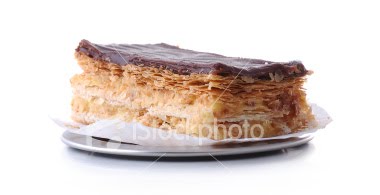
Hi everyone!  I always feel so rude not saying hi.  I hope that you guys are having a great weekend.  I've been doing a two week no junk food challenge and, let me tell you, it has been very difficult!  I love to bake and when I don't have the time, there is a Cuban bakery (if not multiple) within a mile of most places in this city.  The Cuban bakeries are super affordable, so I wouldn't even feel bad if I went weekly.  I was struggling especially yesterday, the last day of the challenge, because I had the hugest craving for a chocolate señorita (Cuban napoleon topped with chocolate--my photo is from pasteldeguayaba.blogspot.com).  As good as that looks, the real ones are even better.  More cream, an almost graham cracker colored flaky crust, and a thicker, more solid layer of chocolate.   ::sigh::.  

[ist2_3341384-cuban-se-orita-pastry.jpg]
Anywho, it's Friday and the challenge is over, so I decided (days ago, haha) that I would reward myself today by making buñuelos de yuca, Nicaraguan yuca donuts.  I know, guys, what on earth would anyone want with a yuca donut, right?  Let me tell you, honey, don't mess around with the yuca donuts.  They are delicious!!  I am a huge fan of flavor oppositions and I just love the very slightest salty bite that these donuts have from the addition of cheese, yes, cheese.  Don't start hurling "you're crazy!" insults at me yet.  Just hang tight.  So you've got the yuca and grated white cheese as the donut flavor then you've got this amazingly tasty homemade syrup topping.  The syrup is made of either turbinado sugar or, my personal favorite, piloncillo.  If you use turbinado sure, be sure it's a nice, dark one.  Those are the most flavorful.  I have no idea what piloncillo (aka panela/dulce de rapadura) translates to because I really don't think it exists in the traditional American culinary repertoire.  Just the same, I'm sure it's at any Latin market.  

Piloncillo is used throughout Latin America.  It is the result of evaporated sugar cane syrup that has not been processed.  That means that the rich, delicious molasses taste remains and the sugar is sold in block, not granulated form.  You don't even know what you're missing until you've at least smelled piloncillo.  It's the kind of thing you want to linger in your house, sort of like the smell of freshly-baked cookies.  Anyway, I digress...so the syrup is just a basic simple syrup made with equal parts water and one of the sugars I mentioned with three or four good quality cinnamon sticks added in.  I'm telling you guys, you can't even imagine how good this is until you've had it.  There's no need for vanilla or other essences because the sugar's natural, caramelized richness from the molasses is still in tact.  No there's no bitterness like molasses has, just smooth, rich goodness.  

So I'll take a moment to be honest with you guys.  These yuca donuts are traditionally made with Nicaraguan queso seco (what you see by that name in Richmond is not the Nicaraguan one, but it will do).  Well, I have never purchased queso seco for my home before, I've only had it out and I fell in love with it.  I decided that today I would buy it make the traditional version.  Well I decided to get fancy and go for the smoked version rather than the regular because it tastes so wonderful in the heavenly ripe plantains (maduros en gloria) that I get at the fritanga (Nicaraguan homestyle cafeteria).  Guys, talk about failure!!!  That stuff is wayyyyy too salty and wayy too smoky, and it totally ruined my buñuelos today : /.  I also used baking soda instead of powder in my haste; but that was minor. The smoked cheese, however, was a major failure.  :::sigh:::  Whatever...

I've made this recipe before and it is absolutely divine with a mild, white cheese and the piloncillo-based syrup.  As my dear host mom in the Dominican Republic used to tell me, don't expect anything you cook to turn out right if you don't have the time or energy to add the most important ingredient of all--love.  She was so very right.

Don't be like me.  Just get a mild white cheese, such as cuajada, queso fresco, and I would say even mozzarella or ricotta would do.  Just be sure that the cheese is not really salty.  You want a mild, white cheese.  Anyway, mmmmm, what heavenly results you shall obtain from following this recipe and not being a loca like me.  And let me not forget to say, this has to be THE easiest dessert you will ever make.  See the recipe below, and if you know something easier, do share!

This recipe was adapted from a combination of Oswaldo Chamorro's version from Cocinemos Juntos (http://www.youtube.com/watch?v=zh3m3r5MFkQ) and Maria Esther's version on Nicaragua en mi Sazon (http://www.facebook.com/video/video.php?v=415279747755).  A huge thank you to the both of them for sharing such wonderful Nicaraguan recipes!


*The photos above have been driving me nuts.  I've fixed them 5 times.  If they fail to load completely, click them and the enlarged version shows up just fine.

Buñelos de yuca
tips: yuca is normally cheaper at Latin markets.  Choose the more slender roots, as they are the most flavorful.

Ingredients:
Simple syrup
1.5 cups sugar (if it's piloncillo, you can shave it, grate it, or chop it)
1.5 cups water
3-4 Cinnamon sticks
Bring to a boil then turn off
Lime juice, a few squirts up to the juice of one lime (optional--I usually skip it but some people like tangy-ness)

Donuts
2 cups peeled and (finely, not the big side of the microplane) grated raw yucca
1 cup of shredded or crumbled white cheese --Nicaraguan queso seco (white, not smoked), cuajada or some similar milder, soft or semi-soft cheese
1 egg
1/2 tsp baking powder (not soda) 

Oil for deep frying

Procedure:
With clean hands, mix all of the ingredients in the donut section and form into either small balls, cylinders, or disk-like pillows.  The shape is simply a matter of personal preference.  Some people even just drop the dough directly from the spoon into the oil.

Fry donuts in pre-heated oil over medium heat until golden brown.  You will know when the oil is ready if you drop a small piece of dough into it and it sizzles.  Place fried donuts on a paper-towel-lined plate to absorb any excess oil.  

Meanwhile, add all ingredients in the syrup section besides the lime juice into a small sauce pot over medium heat.  Stir the mixture occasionally until the sugar dissolves.  Bring the sugar mixture to a boil, stirring occasionally.  At this point, add in the lime.  Let the mixture boil for just a few minutes.  Do not overcook the sugar mixture or it will crystallize.  Just a two or three minutes will suffice.

Serve the donuts with a generous dousing of sugar syrup :).  Mmmm, yes, a dousing ;).  Hey, the donuts themselves don't have sugar, remember?  Enjoy!!

Hugs, 
DF

Wednesday, February 16, 2011

Sopa de Albondigas and My Not-So-Secret Secret Love--A Delicious Cuisine You May be Missing Out On


Sopa de Gallina con Albondigas--Hen/Chicken Soup with Meatballs
shredded chicken meatballs, chicken wings, malanga/yautia, plantain, cabbage, herbs


Miami's easy access to authentic Caribbean food as well as Caribbean ingredients in supermarkets have allowed me to try my hand at learning a number of new foods.  Nicaraguan food is one that it never crossed my mind to try.  I am a very adventurous cook and often try recipes from countries I’ve never been to and end up with dishes I’ve never had in my life and probably never will have outside of my own kitchen.

Here in Miami, second to Cuban food, Nicaraguan food is probably the next most prevalent.  Before coming to this city, I’d never heard the slightest mention of Nica food.  I will say that it has to be among the most severely underappreciated cuisines I know of.  It is very versatile, very flavorful, and full of lots of vitamins that are vital to our diets.  In fact, Nicaraguan food has very much become my culinary love, if not obsession.  I love it's tangy flavorfulness, the comforting feeling it gives you, and it's almost playful culinary ingenuity.  You may not have had Nicaraguan food before, but don't be afraid.  Step out and try something new!  

Nicaraguan food is very much reflective of its continental Caribbean location.  The cuisine of Nicaragua has been heavily influenced both by the African-descended population on the Atlantic coast and its indigenous roots.  Its cuisine is best known for its grilled meats, especially churrasco, here in Miami, as well as its delicious and hearty soups and stews.  Unlike Cuban food, Nicaraguan food always comes with veggies, even if it's only the very Nicaraguan ensalada (salad).  Nicaraguan ensalada is shredded cabbage, carrots, and sometimes chopped tomatoes and onions that is quick-pickled in lime juice, salt, sugar, and sometimes a little white vinegar.  It is an accompaniment to anything that is grilled, baked, or fried.  I absolutely love Nicaraguan soups and stews.  They come with tons of root vegetables and other starches, such as yuca (Eng - cassave, Fre - manioc, Kre- kasav), yautia (Eng - cocoyam, Span2 - malanga), and plantain (Span - platano, Fre - banane) as well as other veggies such as auyama/calabaza (buttercup squash), corn (still on the cob and chopped into three or so rounds), chayote squash (Span2 - tallota), carrots, and often tomato.  The seasoning used in Nicaraguan cuisine is grounded by a heavy use of fresh mint, onion, green pepper (chiltoma in Nicaraguan Span.), garlic, lime juice, bitter orange juice, as well as the use of other herbs such as parsley and cilantro.

One of my favorite Nicaraguan dishes is sopa de gallina con albóndigas (hen or chicken soup with meatballs).  If you've never had sopa de gallina, it is made with a whole chicken or hen cut into pieces, yuca, yautia, plantain, carrots, cabbage, corn on the cob, buttercup squash, chayote squash, mint, onions, garlic, bell pepper, tomato, bitter orange, and sometimes lime, cilantro, and parsley.  It is a delicious soup that has a light tangy-ness, a light herb-y flavor, and it gives you that nice, warm, comforting sensation that all Nicaraguan food does.  If you're like me, and you're uneasy about the idea of mint in your savory foods, don't worry; the seasoning blend in Nicaraguan food works very well with mint.  It is not overpowering at all.  It's not too different from the flavor you get from adding similar herbs to pho (Vietnamese beef soup).  The overall flavor, of course, is very different from pho.  Sopa de albondigas, as it is also known, is very hearty and has lots of vitamins that are vital to a balanced diet.

Below is my recipe for a wonderful sopa de gallina con albondigas.  I've combined elements from the following recipes and made the dish my own.
http://et-ee.facebook.com/note.php?note_id=162025655075, http://www.recetasnica.com.ni/Sopa-de-Albondigas.html, http://www.taringa.net/posts/recetas-y-cocina/2585683/Como-hacer-Sopa-de-Albondigas-_-Comida-Nicaraguense.html

You will need your large stock pot for this one.  It's a family-sized portion that will leave leftovers, but not a ridiculous amount.  Just invite a couple of friends and family members over.  Enjoy!


Sopa de Gallina con Albondigas Nicaraguense 
(Nicaraguan Hen/Chicken Soup with Meatballs)

Ingredients:
Soup:
14 cups of water
1 large whole chicken or hen (marinated at least an hour in lots of smashed fresh garlic (6 cloves?), salt (1/2 TB), paprika (1/2 tsp), 1/4 onion (chopped), and pepper), cut up (not bite sized, but into legs, breasts, etc)
1 green bell pepper, chopped
1 red bell pepper, chopped
6 garlic cloves
2 tomatoes (peeled by blanching quickly in hot water then peeling), chopped
5 stalks of fresh mint (wash and leave whole)
2 stalks of flat leaf parsley (whole)
1 stalk of cilantro (whole)
1 tsp celery leaves, chopped (they come attached to celery but you are using leaves only)
1 onion, chopped finely (for the broth)
1/3 TB achiote (eng - annatto), dissolved in water (use the marinade from the smoky garlicky chicken post or approximate its ingredients.  That is the achiote I'm referring to here.)
1/4 cup bitter/sour orange juice (span - naranja agria - found in the Latin section of any supermarket or in any Latin market.  I recommend Goya or Badia brand)
juice of 1 lime (always choose your limes by feeling how heavy they are in your hand.  The heaviest ones have the most juice)
3 TB salt
pepper to taste (maybe 1/2 tsp)

***see other ingredients under the meatballs section***

Vegetables:
1 small buttercup squash, cut into quarters 
(wash well with soap and water, rinse, then remove seeds and stringy fibers and leave on the peel)

1/2 small-medium  cabbage, cut into two wedges 
(leave the wedges whole to prevent falling apart during cooking)

2 stalks of corn (cut into 3 or 4 pieces each)

1 medium to large carrot (cut on a bias into 1/4" thick slices)

2 yellow but firm plantains (minimal black streaking), (cut into thirds or quarters)

1 chayote squash, sliced into lengthwise quarters then cubed into 1-1/2" blocks 
(peel then remove the white heart with a spoon) (optional) (it has no flavor, just a light broccoli-stem-like crunch and is used often in Nica food)

1 medium yuca root 
(choose the most narrow and slender one, these are the best in flavor.  Be sure there are no soft spots, avoid black spot, if possible) (cut into 2 - 2-1/2" thick rounds) (you do not peel yucca with a peeler, rather by breaking through the hard peel with a vertical blow with the blade of a knife, then lifting off the peel by sliding the knife under the pink under layer and pulling it upwards and back)

2 yautia/malanga/coco yam roots 
(found at SE Asian markets (see my market list) and  sometimes at Mi Pais Mart on Hull St near Walmsley, but call ahead--do not ask for  
coco yam; no one knows that word except West Africans and West Indians) ( **cut 
 these into 1" thick rounds**)

Meatballs:
2 level cups of Maseca corn flour
All of the chicken breast from the chicken cooked in the soup above (finely shredded by 
 hand)
1/2 stick of butter (not margarine)
1 egg, beaten
achiote (just enough dissolved achiote to give a reddish orange color)
broth from the soup once meat is cooked (used to moisten the flour and form a dough)
1 stalk of mint, finely chopped
2 stalks of cilantro
1 onion, finely chopped
1 green bell pepper, finely chopped
2 garlic cloves, minced
2 TB naranja  agria
salt (at least 1 tsp, maybe two)
pinch of pepper

Procedure:
Bring the water with the salt, chopped garlic, onion, bell pepper, black pepper, and the achiote to a boil over medium heat (go ahead and cover at this point to reach boiling point faster).  

Once at boiling point, add in your marinated chicken that you've cut into pieces (legs, wings, etc).  I like to take the skin off of everything but the wings.  There is variation on this particular part as some people will take all of the skin off and others will leave it all on.  I've had it both way and, I must say, with all of the skin on, the amount of added flavor is amazing.  A happy medium for me is to follow my suggestion of skinning all but the wings.   Sometimes I even add in a little of the skin I cut off and remove it once its flavor gets into the broth.  As the chicken boils, a frothy foam will appear on the top.  Scoop this foam off and discard it as it appears throughout the cooking process.

Once the chicken breast is cooked (test by inserting a fork.  It is done if the fork goes in smoothly, without resistance), remove it and set it aside to cool.  You will use the breast to make meatballs.  

At this point, once you've removed the chicken, add in the plantain, carrots, buttercup squash, cabbage wedges, and yuca.  You will add the other faster-cooking veggies later.  Let these all cook for 10 minutes. 

After the ten minutes are up, add in tomato, bitter orange juice, lime juice, parsley, mint, celery leaf chayote, malanga, and corn.  After 15 minutes have passed, add in the raw meatballs.  Once they float, turn off the burner.  The soup is now ready to enjoy with white rice or tortilla!

Meatball preparation:
Mix all of the ingredients from the meatballs section above, adding in enough soup broth to form a dough.  Roll the dough into golf-ball-sized balls.  

Tips:
When the chayote is done, it will still have a light crunch.  Do not cook it to the point that it has no crunch.  Malanga is the softest of the root vegetables we are using, so be careful not to overcook it.  If you see that it softens before everything else is done, take it out and add it again once everything is done.  The same goes for the buttercup squash.  If you see that it will get too soft and fall apart if you leave it in through the whole cooking process, remove it and re-add it once everything else has cooked.


Serve with white rice and a thick, warm homemade tortilla